The Drivers Reserve Blog #2 | When Did Cars Lose Their Character?
When Did Cars Lose Their Character?
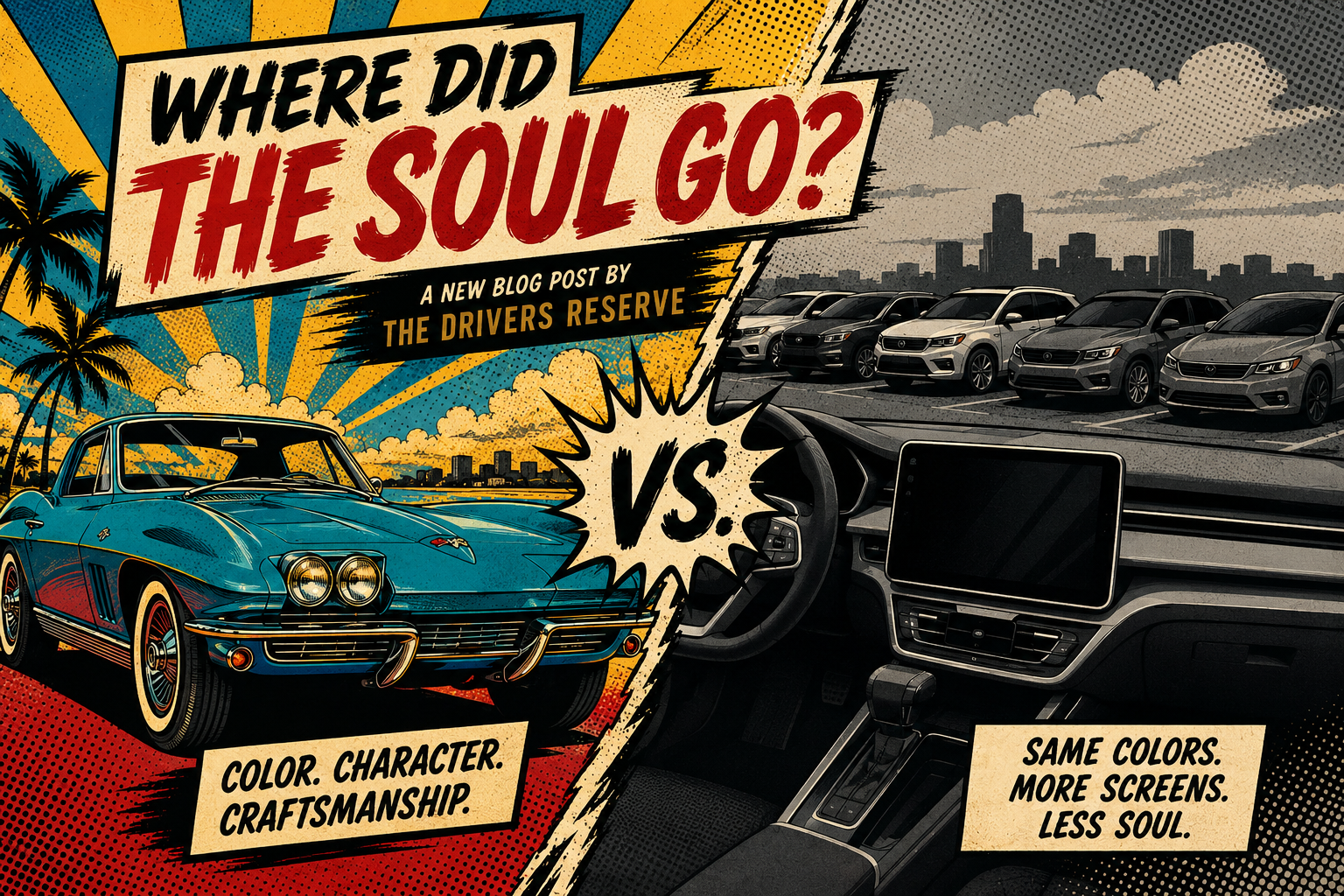
Walk through almost any parking lot today and take a look around. White, Black, Gray and Silver dominate. Different manufacturers, different price points and different badges, yet somehow so much of it blends together. The same neutral colors, enormous screens and increasingly familiar interior layouts.
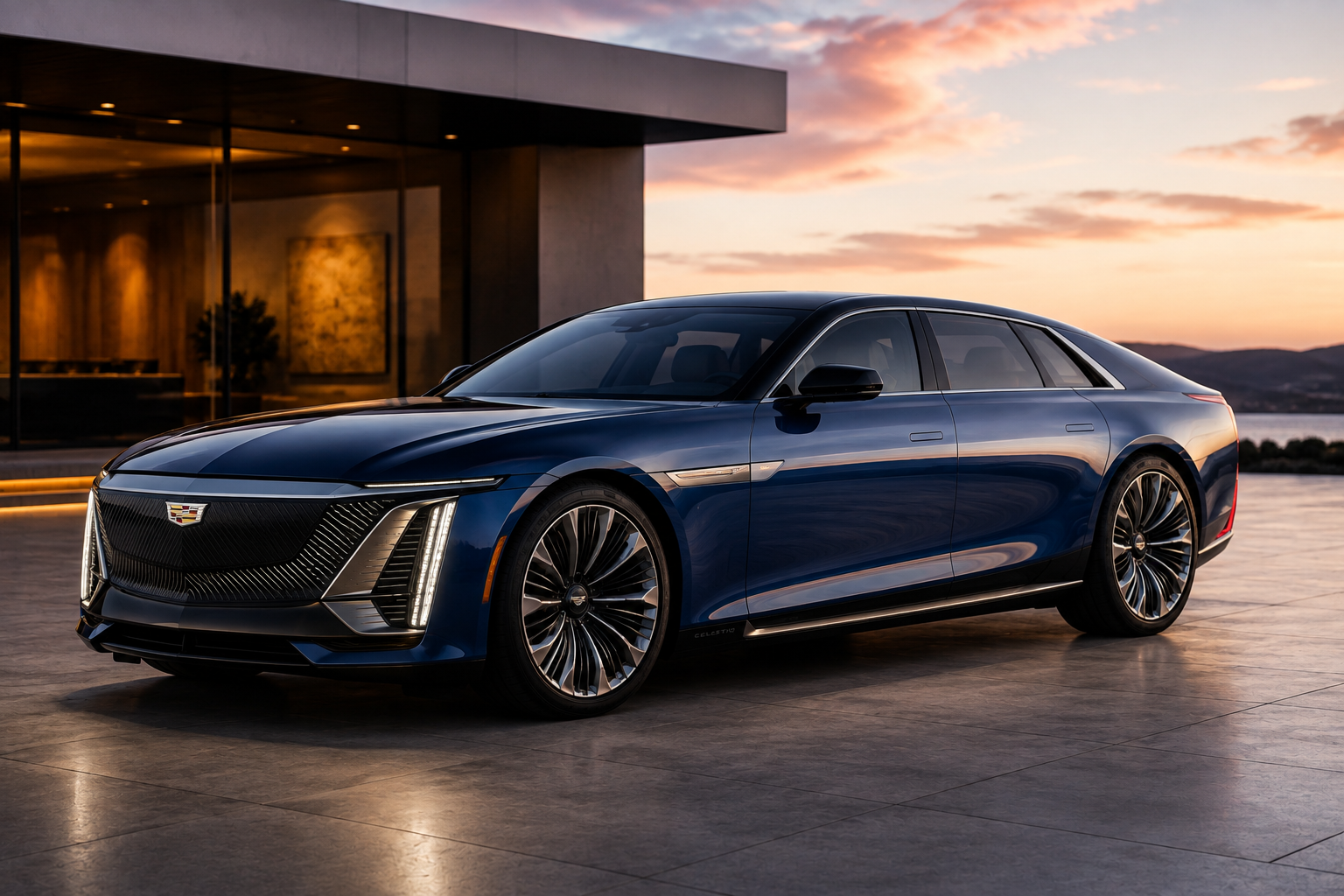
Modern cars have never been more capable. They're faster, safer, more efficient and more technologically advanced than anything that came before them. There are some truly incredible cars being built today.
So why do so many of them feel less special?
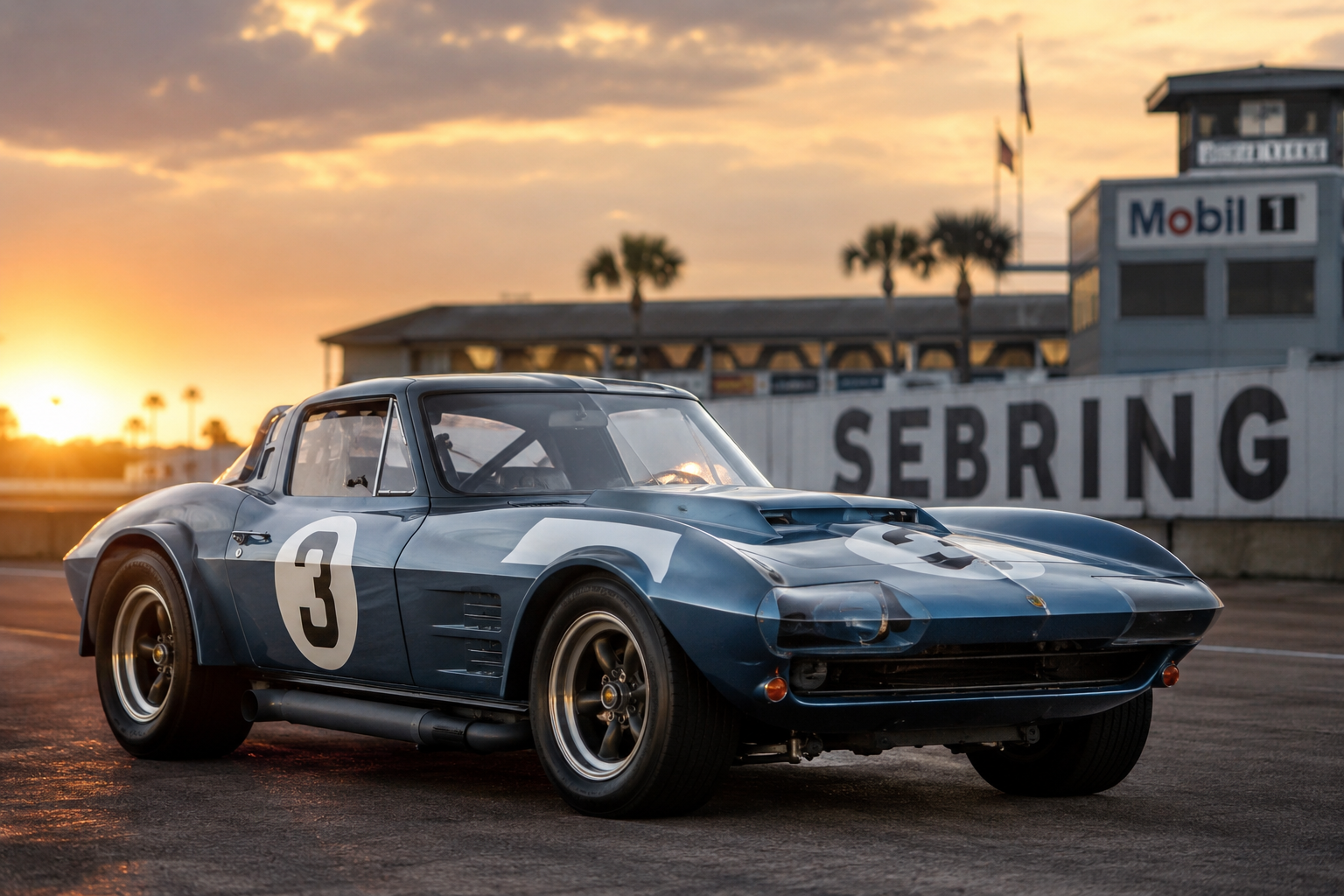
Think about the cars we remember. It usually isn't because they had the largest screen or the most ambient lighting. We remember how they looked, sounded and felt. We remember unusual colors, distinctive interiors, beautiful gauges, mechanical switches and all the small details that gave a car its identity.
Even ordinary cars once seemed more willing to be different. Look back through automotive history and you'll find deep greens, rich blues, burgundies, yellows, oranges, browns and countless unusual combinations. Interiors could be just as distinctive, with different colors, textures and materials giving each car a personality of its own.
Today, we've become remarkably comfortable with sameness, and the numbers back it up.
A study of more than 20 million vehicles by iSeeCars, highlighted by Forbes, found that white, black, gray and silver represented 60.3% of the market in 2004. By 2023, those four colors accounted for 80%. In only two decades, the share of genuinely colorful cars was effectively cut in half.
More recent iSeeCars research suggests that trend may finally be leveling off. Grayscale colors still represented just over 80% of the market in 2025, but their share has remained around that level since 2020. Maybe we've finally reached peak gray.
Color, however, is only part of the story.
Screens have transformed the modern automobile. They provide navigation, vehicle information, entertainment and capabilities engineers could have only dreamed about a few decades ago. Technology isn't the enemy here.
But somewhere along the way, the screen became the centerpiece.
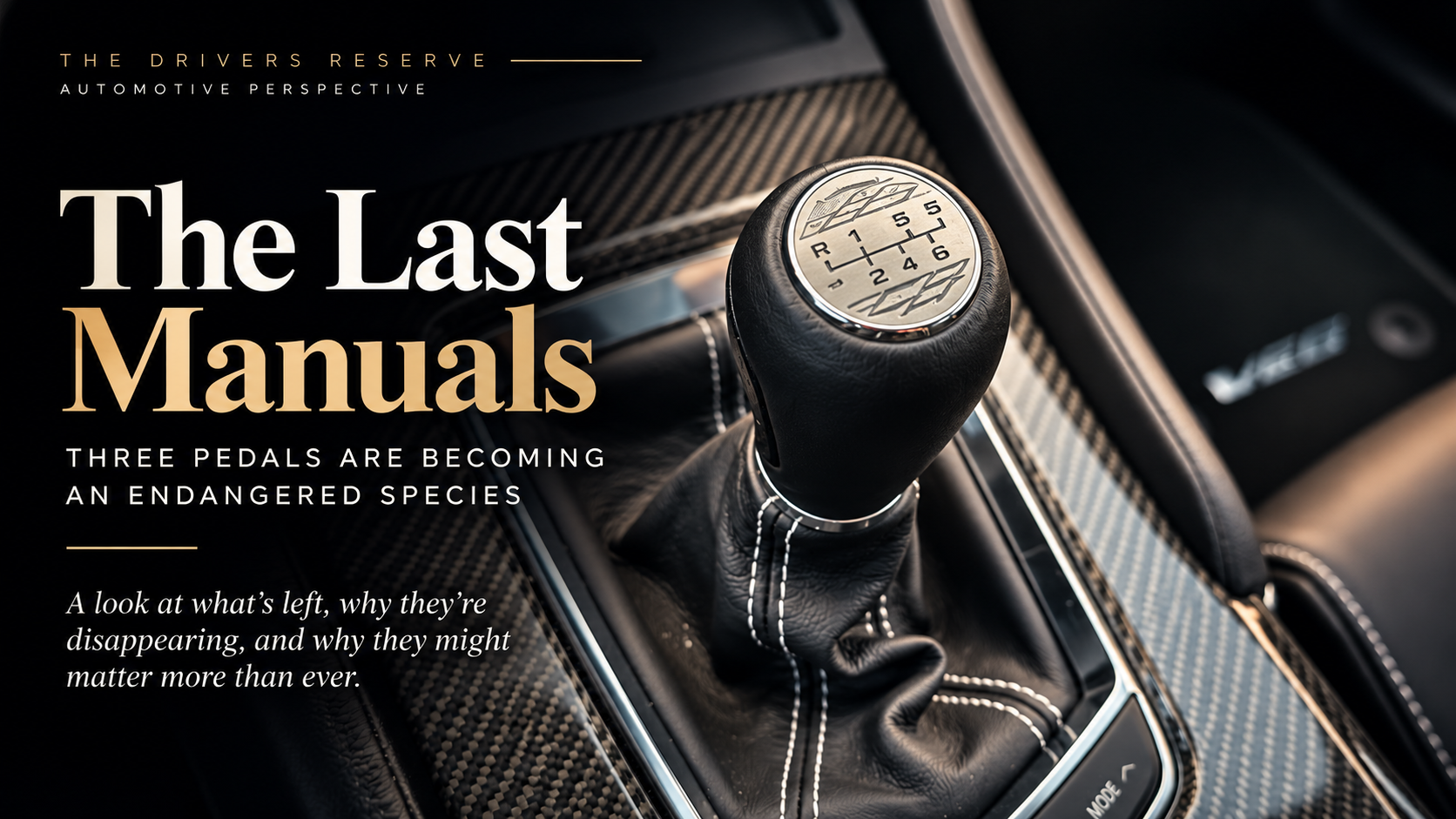
Physical controls disappeared. Analog gauges became graphics. Buttons became menus. Materials that once gave an interior substance and character increasingly compete with glossy plastics, synthetic finishes and touch-sensitive surfaces.
We've gained functionality, but I'm not convinced we've always improved the experience.
The same can be said for luxury. Luxury shouldn't simply mean a larger screen, another strip of ambient lighting or more technology hidden behind another menu. True luxury should be something you can feel. It's the weight of a switch, the grain of real wood, the cool touch of metal, supple high-quality leather, a beautifully designed instrument cluster or the solid sound of a door closing.
It's craftsmanship that doesn't need to announce itself.
And as vehicle prices continue to climb, expecting better materials and greater attention to detail doesn't seem unreasonable.
Of course, there isn't one villain responsible for making cars less interesting. Automakers operate at enormous scale. Manufacturing complexity costs money. Shared platforms make financial sense. Standardized components improve efficiency. Screens can replace dozens of individual switches, and neutral colors are easier for dealers to stock because they're perceived as safer choices for the next buyer.
We as consumers deserve some of the responsibility as well.
If buyers continually choose black, white and gray because they're worried about resale value, or simply because that's what's sitting on dealer lots, manufacturers have every reason to keep producing them.
That's what makes the color data particularly interesting. Despite the dramatic move toward grayscale, the average number of exterior colors offered on a new vehicle changed surprisingly little between 2004 and 2023. The colors didn't entirely disappear from the order sheet. In many cases, we simply stopped choosing them.
Efficiency itself isn't the problem. The problem comes when efficiency becomes the overriding philosophy behind the product.
At some point, you have to ask more than, "How cheaply and efficiently can we build this?"
You also have to ask, "How good can we make it?"
I'm not interested in going backward. Modern engineering has given us extraordinary automobiles, and technology absolutely has a place in them. Some of the greatest performance cars ever produced are being built right now.
But progress shouldn't require abandoning personality.
We don't need another screen simply because there's room for one. We need better materials, better craftsmanship, interesting colors, thoughtful interiors and physical controls where physical controls make sense. We need the small details that exist simply because someone cared enough to get them right.
Most of all, we need cars that feel like somebody took pride in creating them.
Perhaps that's why specification has become such an important part of the enthusiast and collector market. Two cars can share the same year, model and engine and still feel completely different.
The right factory color, a rare interior, an unusual option combination, original materials, documentation, provenance and condition can completely change the character and desirability of a vehicle. Individually, they might seem like small details. Together, they can be the difference between simply finding the model you wanted and finding an example that feels genuinely special.
That's something we believe strongly at The Drivers Reserve.
The search shouldn't end when you find the right make and model. It ends when you find the right car.
The automobile has never been merely transportation. It's engineering, design, craftsmanship, culture and self-expression wrapped into one machine. That's why certain cars become part of our lives. It's why we remember the car our parents drove, the poster we had on our bedroom wall or the first car we worked years to buy.
Cars can make us feel something.
Manufacturers shouldn't lose sight of that in the pursuit of making everything newer, smarter and more efficient. Keep the technology. Keep pushing performance. Keep making cars safer and better.
But give us the craftsmanship back. Give us the colors, the quirks and the personality.
Most importantly, take pride in the product.
Don't just build another car.
Build something worth keeping.
— The Drivers Reserve