The Drivers Reserve Blog #4 | Cadillac Is Bringing Bespoke Craftsmanship Back
Cadillac Is Bringing Bespoke Craftsmanship Back
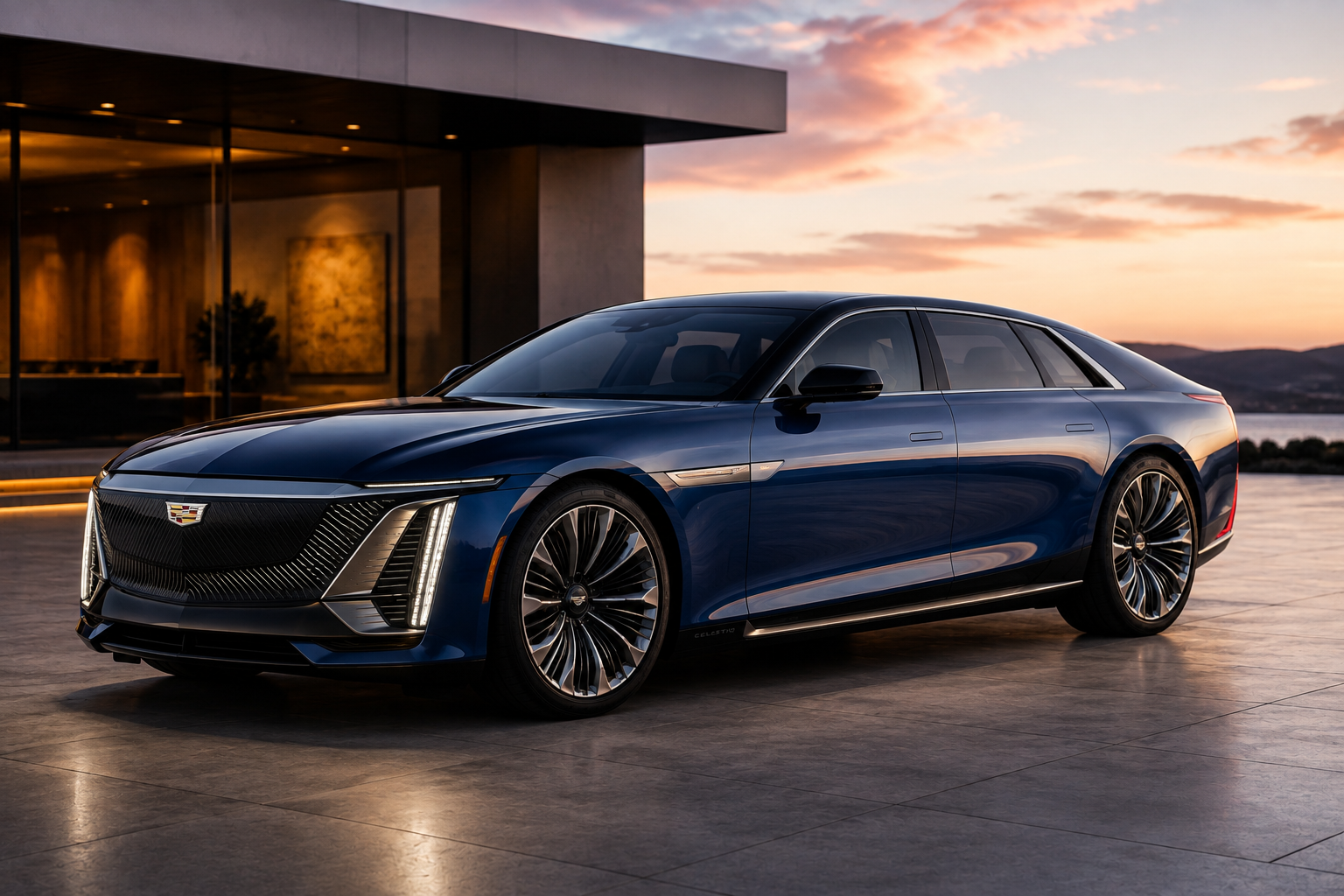
There’s a lot I think the modern automotive industry could do better, but when a manufacturer gets something right, they deserve credit for it. Cadillac is getting something very right with the CELESTIQ.
Whether you like the styling, want an EV, or think a Cadillac should cost over $400,000 is a different conversation. What interests me about the CELESTIQ is the way Cadillac is building it. They aren't building hundreds of identical cars, shipping them to dealer lots, and hoping someone likes the color combination. Each CELESTIQ is commissioned for its owner, and that distinction matters.
Cadillac describes the CELESTIQ as a custom-commissioned, hand-built automobile. Buyers work with a personal design concierge to create their car, choosing colors, materials, finishes, and other details before the final specification is approved (“CELESTIQ”). This isn't the typical experience of choosing between a few interior colors and whatever exterior paints happen to be available.
The possibilities are nearly endless. Cadillac can develop custom exterior colors around a client's vision, while buyers work directly with designers to select materials and finishes throughout the car. Physical samples can be created during the process so the customer can actually see and feel different combinations before making a final decision (Stafford). If you want a particular color Cadillac doesn't offer, they can develop it. If you have something completely different in mind for the interior, you can work with the designers to make it happen.
That's what makes the CELESTIQ interesting to me. You're not just choosing options. You're commissioning your car.
That used to be a much bigger part of what made high-end automobiles special. Today, we've become accustomed to buying cars in packages. Want one option? You might need a $7,000 package containing six other things you didn't ask for. Want a certain interior with a particular exterior color? It may simply not be available. That makes manufacturing easier, but it doesn't necessarily make the finished car more special.
CELESTIQ takes almost the opposite approach. Once the specification is finalized, the car is hand-built at Cadillac's Artisan Center in Warren, Michigan. Production is intentionally extremely limited, allowing Cadillac to spend considerably more time on each vehicle than would ever be possible on a conventional high-volume assembly line (“CELESTIQ”). Even the paint process can take more than two weeks (Stafford).
From a manufacturing standpoint, that probably sounds terribly inefficient. I think that's part of the point. Some things shouldn't be optimized to death.
If someone is spending this kind of money on an automobile, there should be evidence that real time, thought, and craftsmanship went into creating it. That's where I think we've started to lose some of the meaning of luxury.
Luxury has increasingly become another screen, another piece of technology, more ambient lighting, or another feature buried somewhere in a menu. Those things can certainly be impressive, but they aren't craftsmanship. To me, real luxury is something you can see and feel: the quality of the leather, the finish of the metal, the texture of the materials, the way a switch feels when you use it, or the depth of the paint. At this level, it should also mean owning something that isn't exactly the same as everyone else's.
That's what Cadillac seems to understand with the CELESTIQ. There is some irony here, of course. The car has a massive 55-inch display across its dashboard and is one of the most technologically advanced Cadillacs ever produced. Road & Track even questioned whether more traditional analog details could have made the interior feel more timeless (Bovingdon). I can understand that criticism, but I also don't think bringing craftsmanship back means pretending technology doesn't exist.
The two can coexist. Keep the technology. Keep pushing performance and engineering forward. Just don't forget about the materials, the details, and the people actually building the car.
Cadillac once called itself “The Standard of the World.” That's an enormous statement, but at its best, Cadillac represented American ambition. The cars were distinctive, beautifully finished, and unmistakably Cadillacs.
CELESTIQ doesn't try to recreate those cars, and it shouldn't. What it brings back is something more important: the philosophy behind them. Build something special, let the customer make it personal, use great materials, take your time, and take pride in what leaves the building.
That's what I respect about the CELESTIQ. You don't have to like the car to appreciate what Cadillac is trying to do. In an industry increasingly focused on building more cars, faster and more efficiently, Cadillac created one where the entire point is to slow down and make each one different.
I hope more manufacturers are paying attention, because maybe the future of luxury isn't about giving us more.
Maybe it's about giving us better.
— The Drivers Reserve
Works Cited
Bovingdon, Jethro. “The Cadillac Celestiq Is Both Spectacular and Strange.” Road & Track, 6 May 2025.
Cadillac. “CELESTIQ.” Cadillac, General Motors.
Stafford, Eric. “Cadillac Gives Us an Inside Look at Building a Bespoke Celestiq.” Car and Driver, 26 May 2024.